
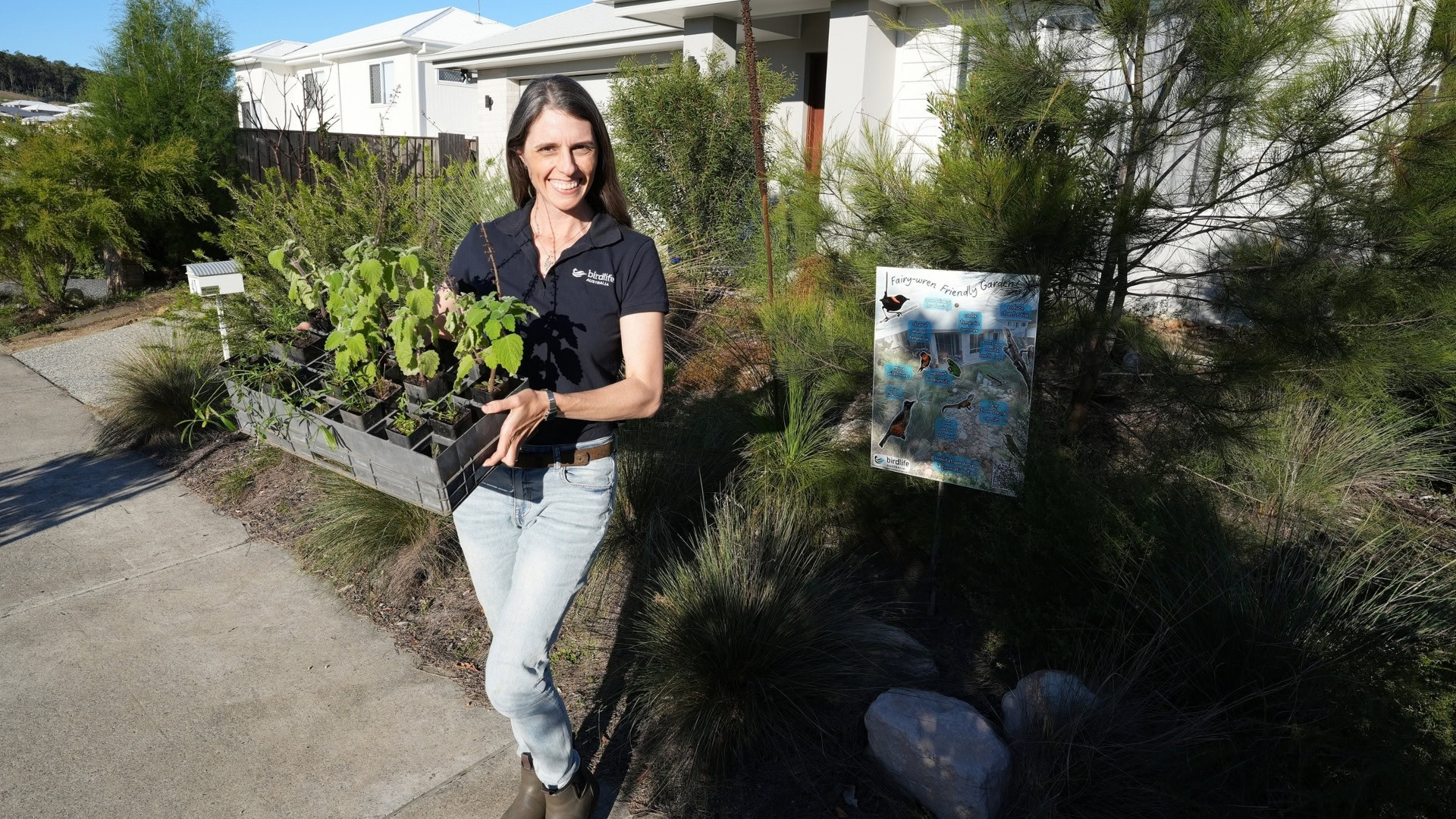
There are moments of sensory joy everywhere as you explore this garden – the warbling of wrens and finches, the impossibly soft coating of Queensland silver wattle pods, the coolness of air as you pass through the fern garden, spotting a hidden casemoth caterpillar wedged tightly under bark, the fresh scent of crushed native mint leaves.
Three years ago, this small 517 square metre block in the fast-growing suburb of White Rock was just like any other new home block – a completely blank slate.
The extraordinary transformation of the 220 square metres of outdoor space into a thriving habitat for native wildlife will be showcased as one of the feature gardens in the Sustainable Open Garden Trail on 3 October 2026.
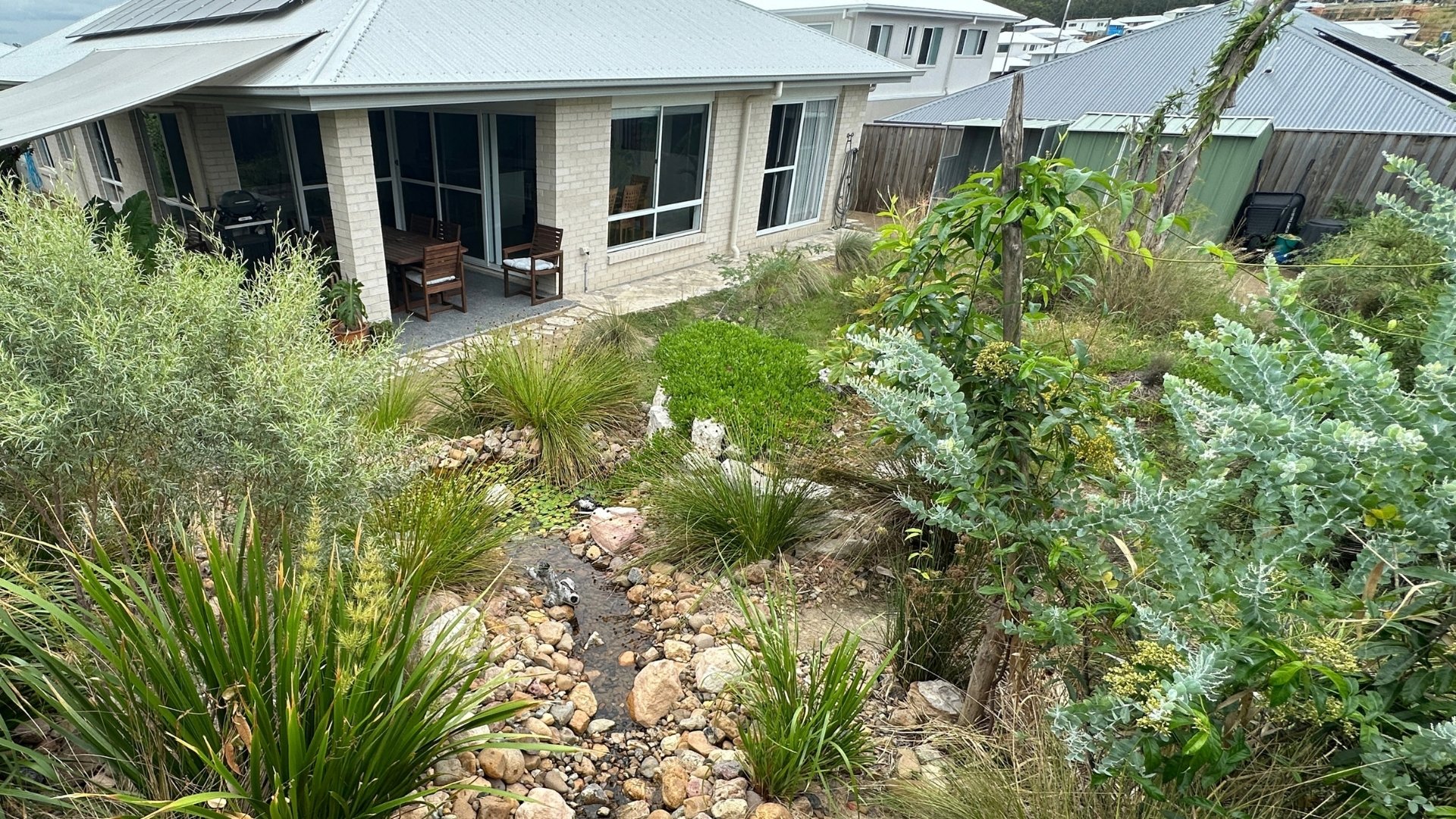
For owner Christina Zdenek it was an opportunity to apply her knowledge as an ecologist to her first garden, having previously lived in rentals and been confined to plants in pots.
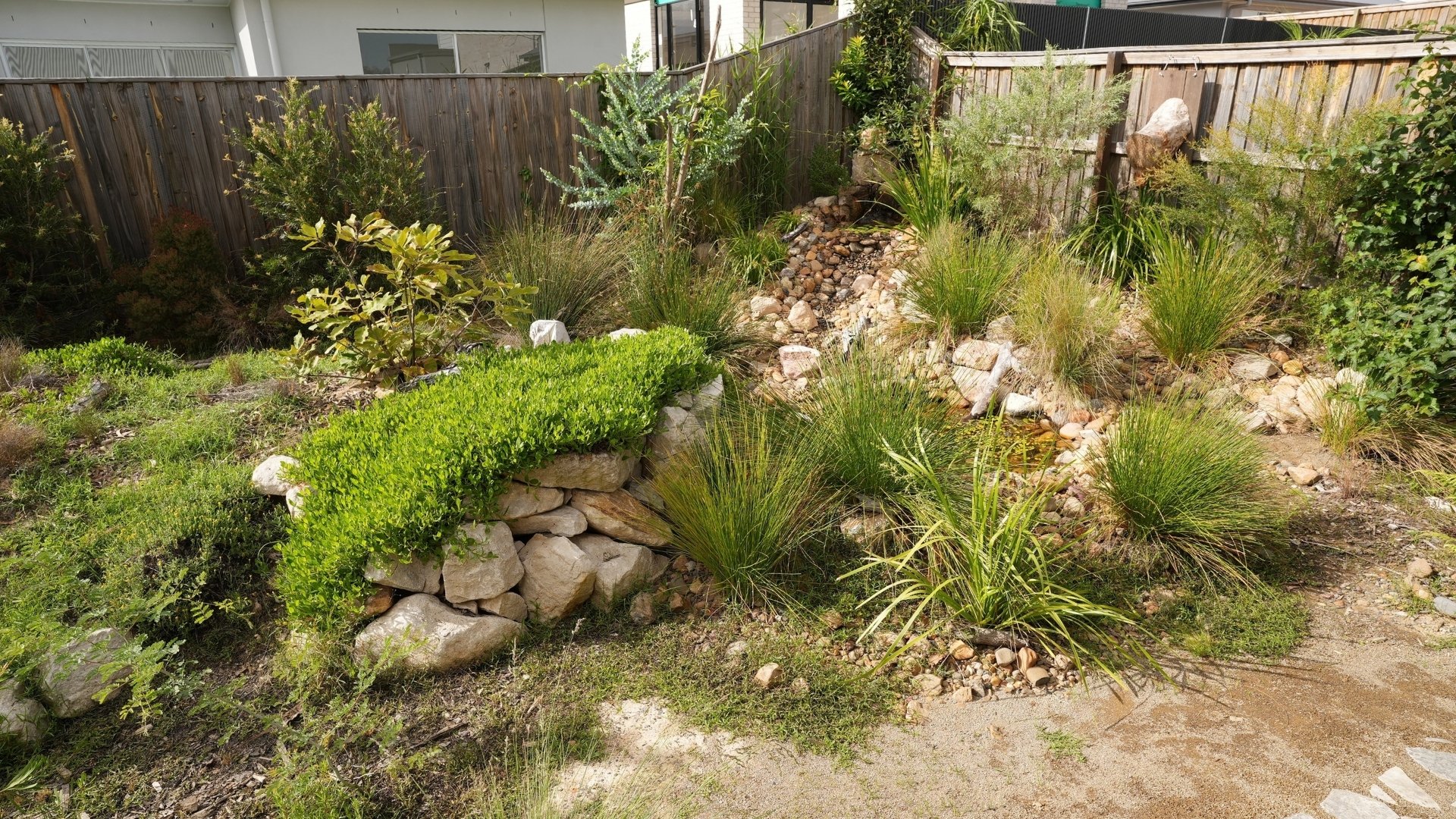
About 25 tonnes of material, including soil, sandstone and decomposed granite, had to be moved by wheelbarrow and hand into the backyard to re-create a more natural landscape with undulation and a rocky outcrop which skinks love for basking in the warmth.
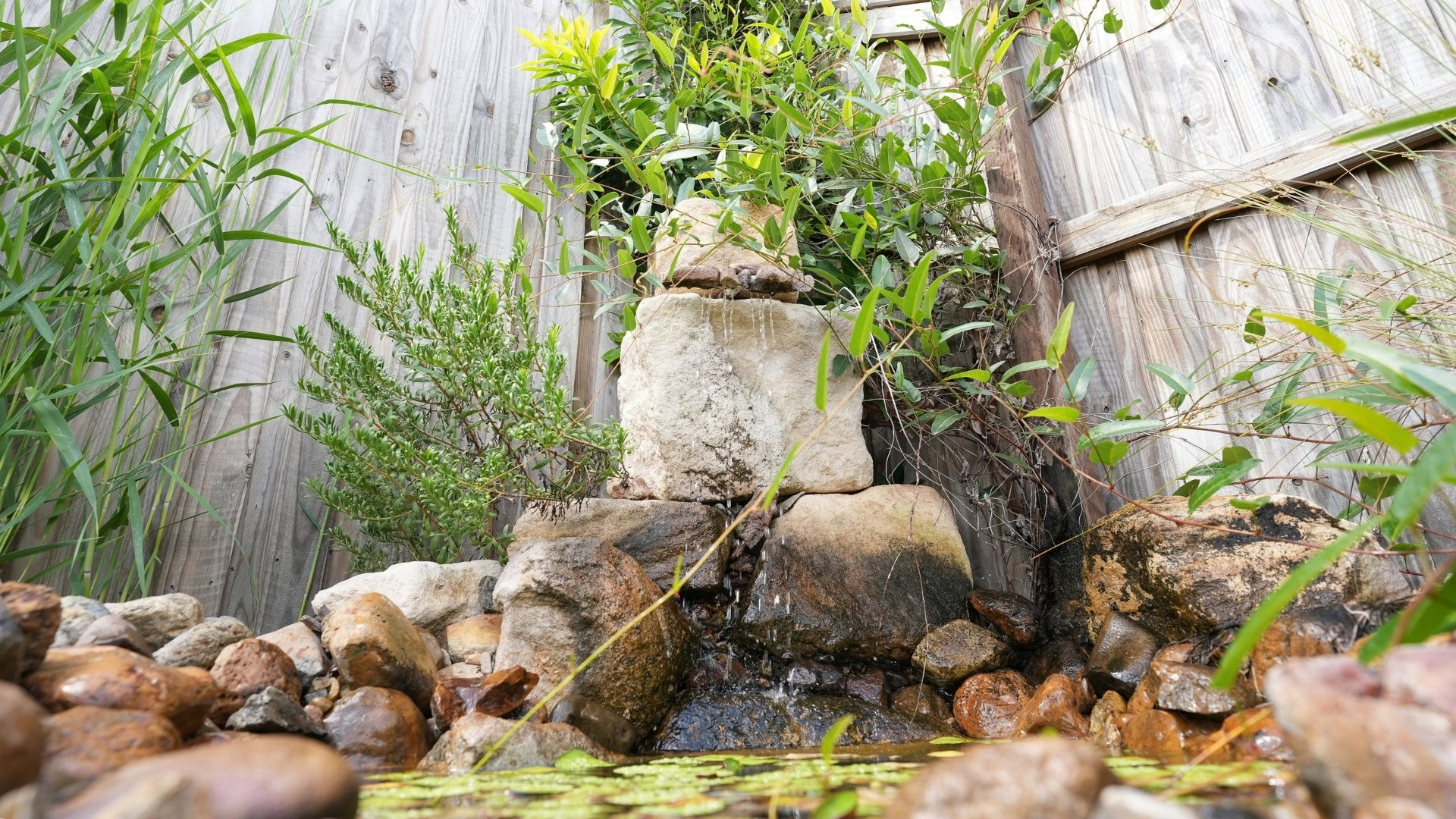
A main focal point is the water feature. The bigger rocks were rolled into position to create a cascade, which flows into a meandering run with pools of different depths.
It is visually pleasing, but Christina says also provides important service for wildlife.
“The critical thing with a habitat water feature is to have both shallow and deep water. Birds need to do bathing for feather health and the ability to fly in an agile manner, which is so important when escaping roaming cats,” Christina said.
There are many clever ways that Christina has created safety for small birds in her garden which can be recreated in any Ipswich garden.
“The biggest thing is layering vegetation,” Christina said.
“Sixty-four species of woodland bird are in decline across Australia due to habitat destruction, including the ‘edge effect’ and the increase in noisy miners.
“People want to take their gardens back for the birds – the robins and the wrens – and a big part of that is bringing back the mid-storey.”
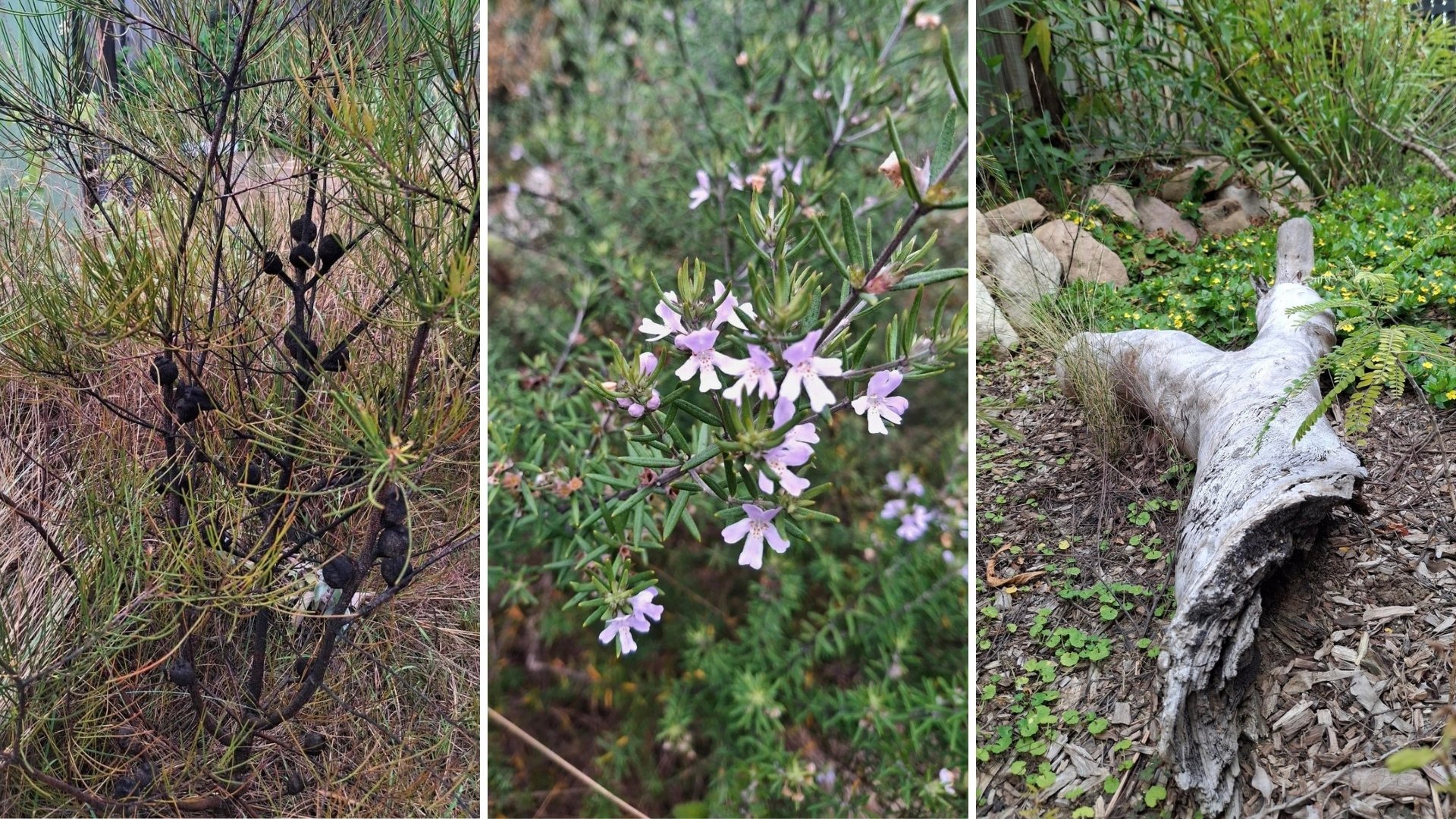
Christina has used species such as Hakea, Westringia and Banksia for mid-storey, as well as other needle-leaved and fine leaf plants.
“I would recommend against cultivar grevilleas, they have such a long flowering period,” Christina said.
“Especially when you plant lots of them together you create a super nectar source which encourages the incessant mobbing behaviour of noisy miners.”
One of the most interesting techniques demonstrated by Christina is attaching dead branches to the top of the fence to create perches.
Larger branches, supported by star pickets, create a 3D structure with Christina then using fast-growing native vines to create an instant ‘tree’.
These provide shade, small bird refuge, and privacy into the neighbour’s yards. Even the traditional ‘dead space’ in the shady, narrow side access has become a habitat feature.
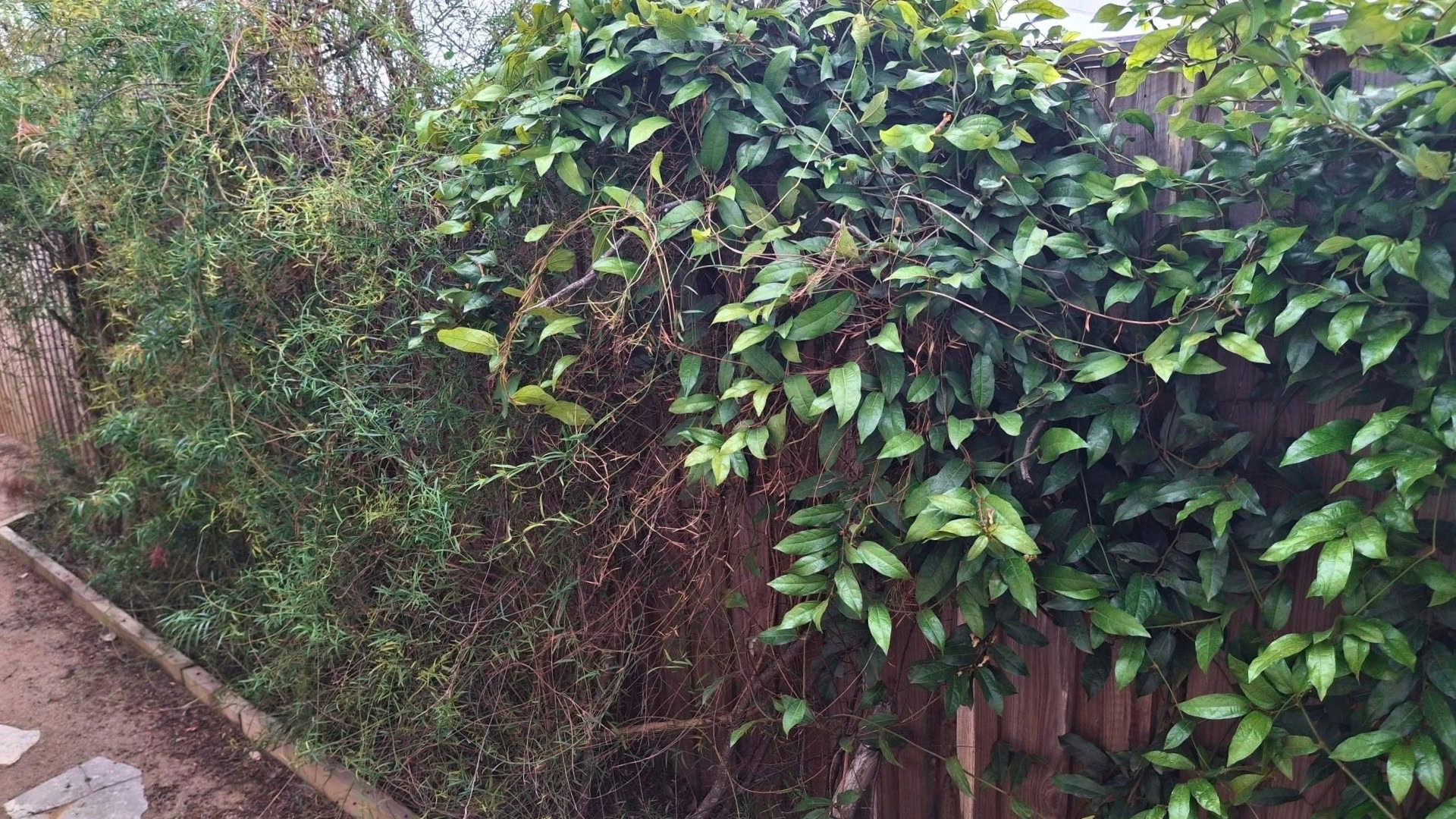
Christina has trailed Richmond Birdwing Vine (vital to the survival of the vulnerable Richmond Birdwing Butterfly) and narrow-leafed Jasmine to create a lush ‘hedge’.
“The fairy wrens and double-barred finches hang out here. My office is nearby, and it’s lovely seeing the cute birds preening each other. It also helps to cool the house in summer,” Christina said.
Everywhere you turn in this garden there are habitat features – scatterings of leaf litter and hollow branches, a five-metre vertical log with exfoliating bark – all vital to the lifecycles of different species.
“Without the right habitat features we’re excluding massive zones from these species,” Christina said.
Christina feels content that her garden is now mostly completed and spaces will fill as plants grow. She noticed that in one spot where a plant died, the double-barred finches seemed to enjoy the open space next to the denser plants.
“Although there are gaps and I’m tempted to fill them in, the wildlife show me to keep it this way,” Christina said.
The Sustainable Open Garden Trail is on Saturday 3 October 2026 as part of Sustainable Ipswich.
Registrations are required for this free event. For more information see Ipswich.qld.gov.au/sustainability
All gardens featured are members of council’s Habitat Gardens program.
Members can receive up to 26 free plants a year from council’s Nursery as well as attend workshops and receive information and updates from the program officers.
Christina’s garden journey has also been documented on her Instagram @naturepositiveliving.
Also read:
>> Smooth journey through Ipswich Nature Centre in upgrade milestone
>> Funds available for projects that will help make Ipswich greener